


We’re now in Heraklion – the capital city of Crete. People from the Continent of Africa have been arriving here for millennia. They still are.
Moustafa smiled broadly when I told him that Bill and I were going to Crete. He is a young man from Egypt we met in Santorini, who seemed especially pleased that we were coming here.
“You are going to love Crete”, he said. “Many arrive to Crete in crowded boats, and are gathered up, put in a large house, and then taken to Athens – where they are processed.” “The water there is sacred.”
For migrants, Crete could be considered a place of safety and new beginnings. I wondered if this had also been the case for him.
On separate occasions, Moustafa made sure Bill and I knew that (unlike most others) he had “his papers”, and could travel around the EU as he pleases. He thinks that his next stop will be France.
Moustafa has no plans to return to Egypt. Nor does he think he will ever see his mother or her people, again.
When, in a hushed voice, he said, “They are from Sudan”, he suddenly seemed uncharacteristically sad. I remained silent and waited for anything further he wanted to reveal.
People from North Africa were first to inhabit and develop this island. Evidence of their existence was discovered by 20th Century archaeologists who named them Minoans and Mycenaeans – civilizations estimated to have settled here, on the Greek archipelago, in the Neolithic to Bronze Ages – thousands of years BC.
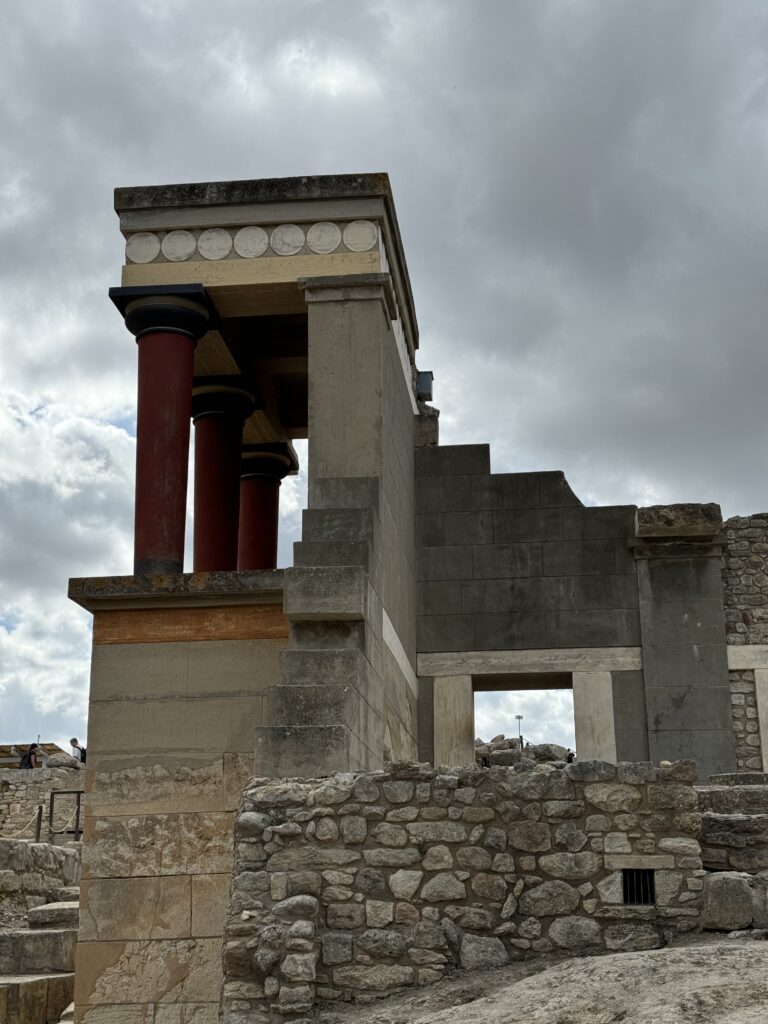
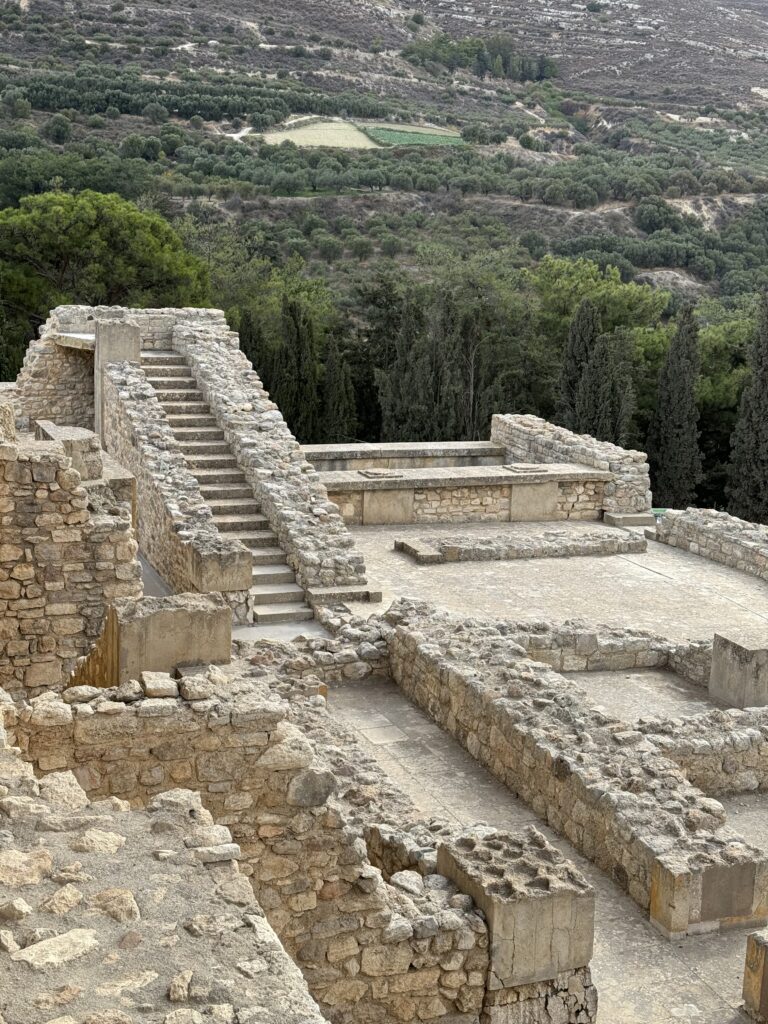
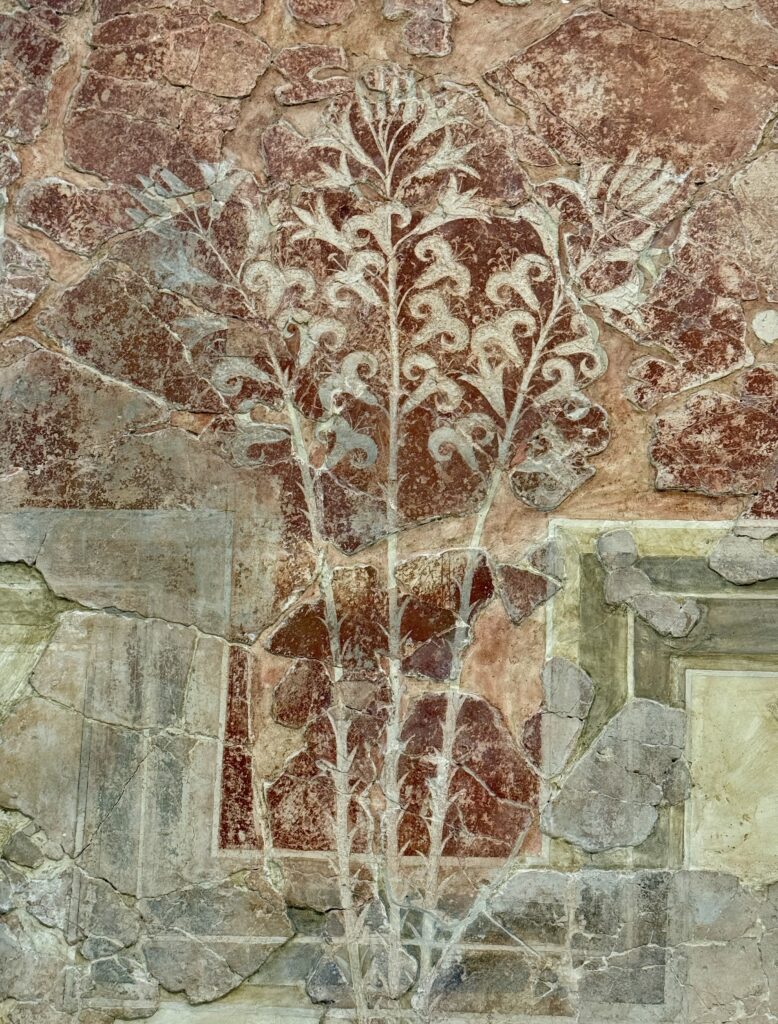
In Knossos, and later at the Archaeological Museum, Bill and I walked through what remains of their artistry and architectural ingenuity. Structural remnants of homes and the Royal Palace, complete with sophisticated plumbing, staircases and intact walls, bore images of flora and fauna believed to have been treasured but left behind in Egypt.
Papyrus and white lilies, blue monkeys and exotic birds filled colorful frescoes. While images of brightly decorated boats in rivers of dolphin, and joyful dancing women, displayed their festive abandon.
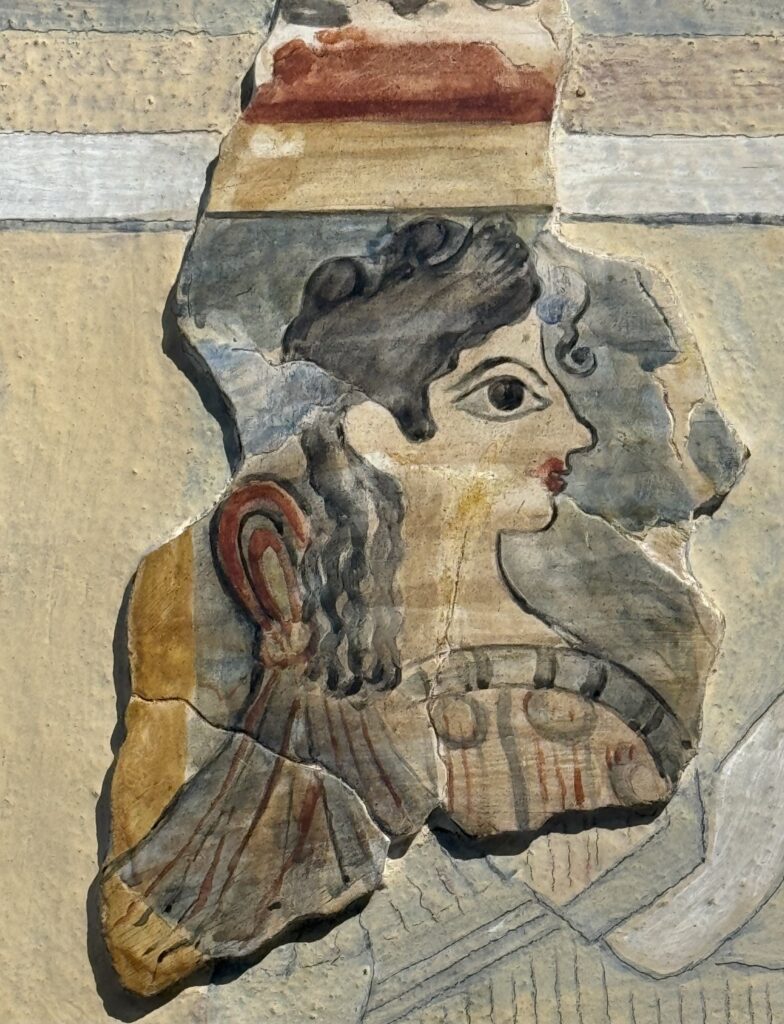
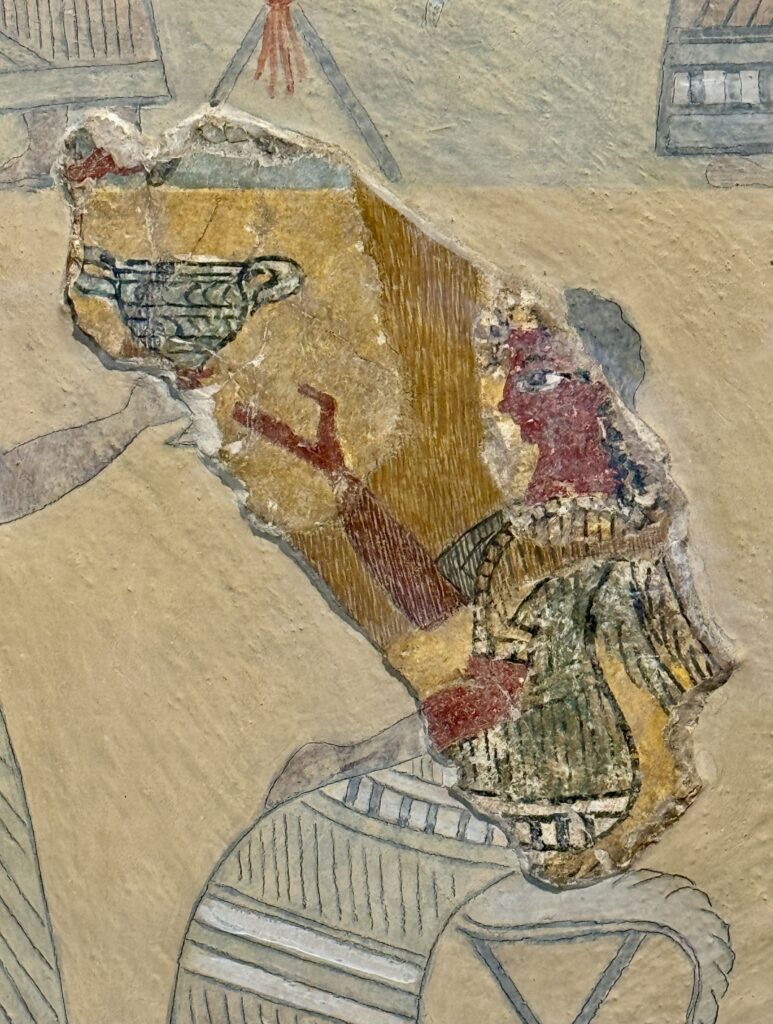
The wonder of it all overwhelmed my contemporary assumptions about the past, the communities we tend to forget, and those we call “ancient”.
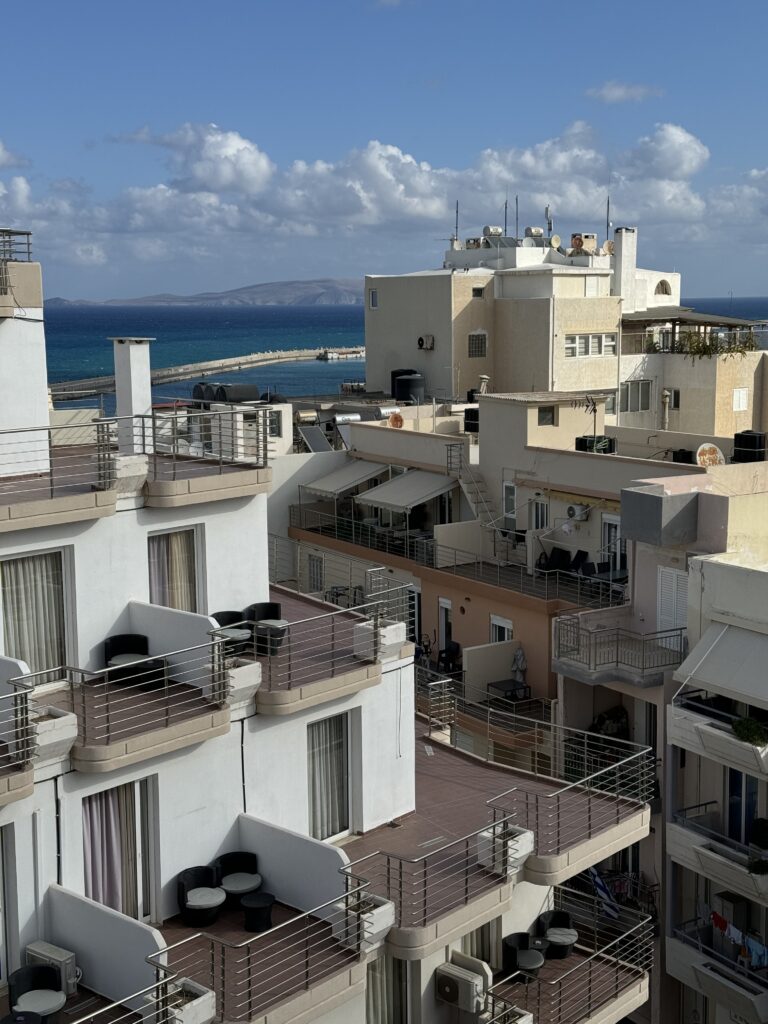
The modern Crete we see today is composed of mostly gray construction of varying shapes and sizes. They fit together like irregular pieces of a puzzle, juxtaposed over time and the oppressive dictates of multiple governments (both foreign and domestic).
Buildings form narrow dark streets traversing across this long narrow country (its shape reminiscent of a great wall), leading you from one side to the other – from sea to sea.
I’m thrilled that Bill suggested we revisit Crete.
He was here over 30 years ago, and is shocked by the ways these important sites have changed. Seeing them for the first time, however, provides me with the excitement and reward found in adventure and discovery. I had no idea these places even existed.
The excavation of historic monuments and sacred places illustrates the layering of meaning found here. Its mythologies and ancient civilizations have been colored by the many societies that have wielded their power; shaping a Grecian view of itself, and our perception of what it really means to be a Cretan.
Along with earthquakes, fires, volcanoes and tsunamis, Crete survives as a a complex, cosmopolitan composite of history, culture and ideas.
It is an honor to be here, now. And I am left wondering, what stories will be told of us when remnants of our existence are revealed.