


I had no idea that Istanbul was considered by many to be the hair transplant capital of the world. Over here, “Turkish Airlines” is also know as “Hairkish Airlines”.
It’s disturbing to encounter men walking around with raw patches of scalp, post-surgery. Especially at the airport where you see them in large numbers, returning home full of hope and renewed vigor.
There are many rhinoplasty patients here as well. If you look closely, you see wounds and bandages everywhere.
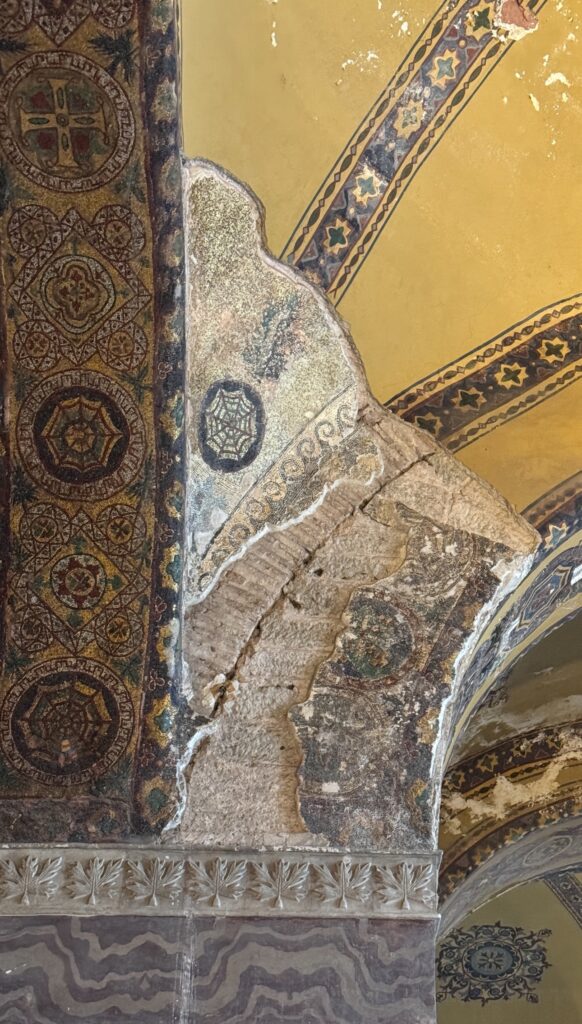
On this return trip to Istanbul, our guide, Derya has helped us uncover even deeper truths. She has sharpened our perspectives on this fascinating city – a crossroads where, even after millennia, cultures continue to collide.
The architecture and ongoing restoration of ancient sites reveal a history of intolerance and conflict, juxtaposed against periods of prosperity and peace. An ongoing excavation. Our hotel is the city’s restored and repurposed jail. The names of prisoners remain forever chiseled in granite.
Today, while over 3,000 mosques predominate (for a population of approximately 16 million), there are functioning churches, and a significant number of synagogues. All, according to Derya, now peacefully coexisting. “We respect diversity, here” she would have us believe. “Unlike in other countries.”
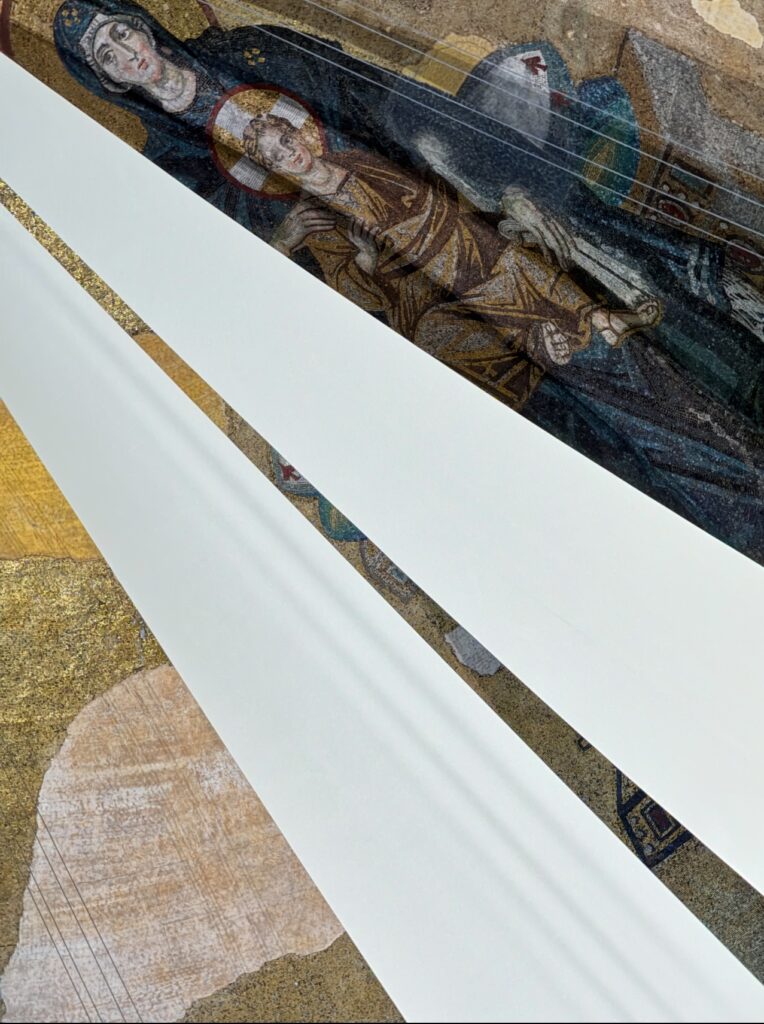
In the Hagia Sophia Great Mosque, white drapes cover mosaics that depict an image of Mary and Jesus. Contemporary archaeology here no longer demolishes the truth of history it reveals.

There are contemporary challenges resulting from migration “Just like what you have in your country”; Derya explained. But the source of tension she experiences is due to generational differences in culture and tradition.
She, for example, chooses not wear a scarf, travels domestically and internationally on her own, and is even pierced and tattooed (which she proudly revealed over tea and Turkish Delight in a 100 YO tea house).
I can’t stop thinking about two instances where “traditionally” dressed women were being “interviewed” by women in modern attire. Surprisingly, the questions I overheard in both were the same:
“How do you feel about your life?” “What brings you joy?” “Where do you get the most fulfillment?”
I don’t remember who, but someone once suggested – to know the condition of a place, to understand the state of its people, to have a deeper view of reality, look to the children and to the lives of its women.
The immigration official at the airport took our passports and, with a smile, asked if we were “friends”. Our taxi had a surveillance camera recording us in the back seat. The driver recorded our voices.
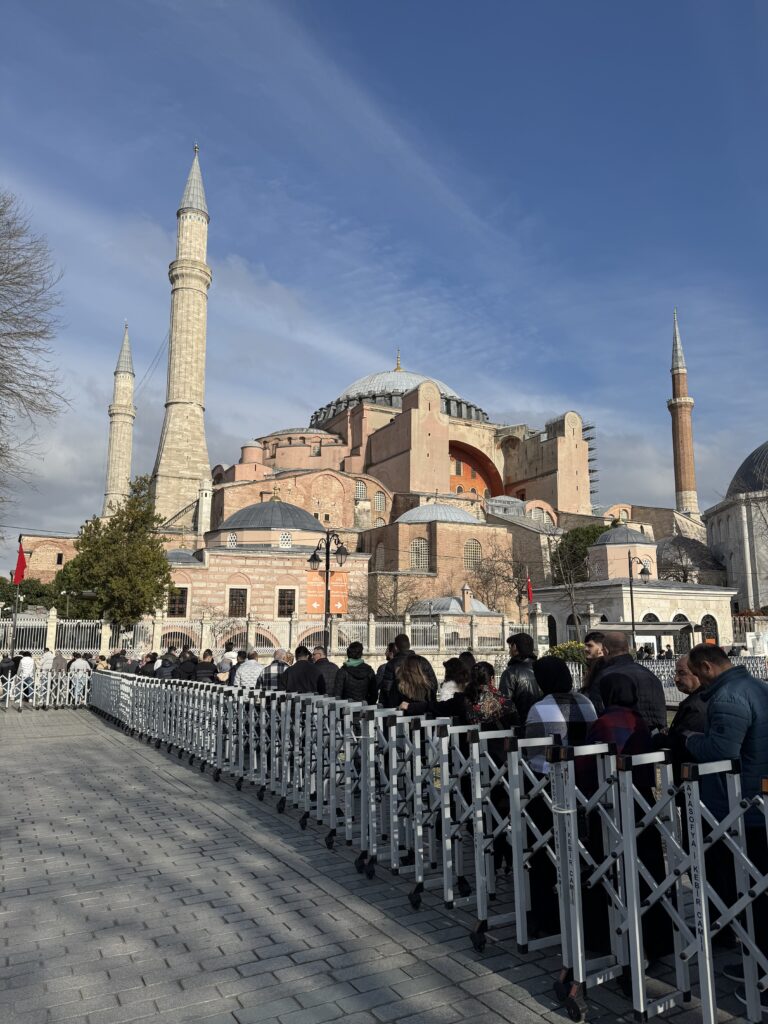
The call to prayer filled the air like a unifying balm, a familiar invitation. Thousands arrived in silence.