


We made it back to the Netherlands and completed our original travel plan. But, instead of going to ABQ today, we’re in Kuala Lumpur, Malaysia for the final two weeks of our journey.
Leaving from Amsterdam, we had to change planes in Abu Dhabi. This was my first time at Zayed International. The building was one of the most imaginative I had ever experienced at an airport. It was also extremely well organized and immaculate; a true pleasure to navigate.
I was so impressed that I forgot to take a picture for you while we were there. And the Etihad B787 that we flew in was amazing! All of it is next generation in terms of design and efficiency. It felt like stepping into the future.
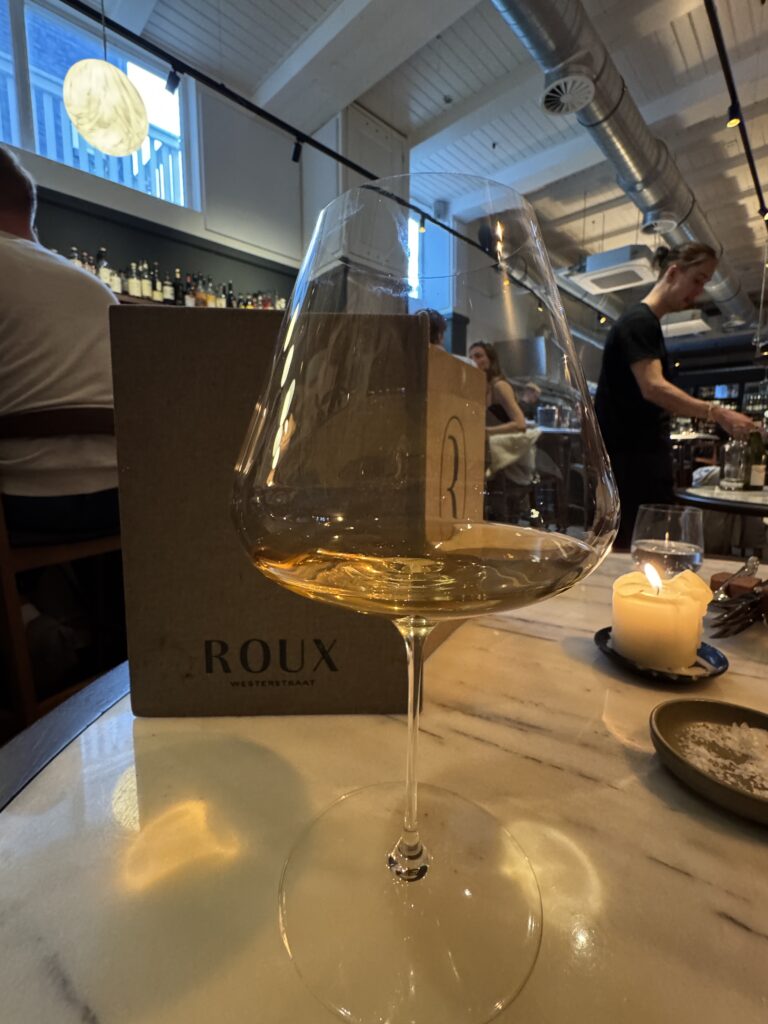
Before leaving Amsterdam, Bill and I had our anniversary dinner at Roux. Anais turned us on to it, and we have been back three years in a row. It would certainly be our go-to restaurant if we lived there.
We also went to the Rijks Museum to see a photo exhibit of images from America. I was curious to see the perspectives that were chosen to illustrate such a diverse people. How Americans would be curated in Amsterdam for the international eye.
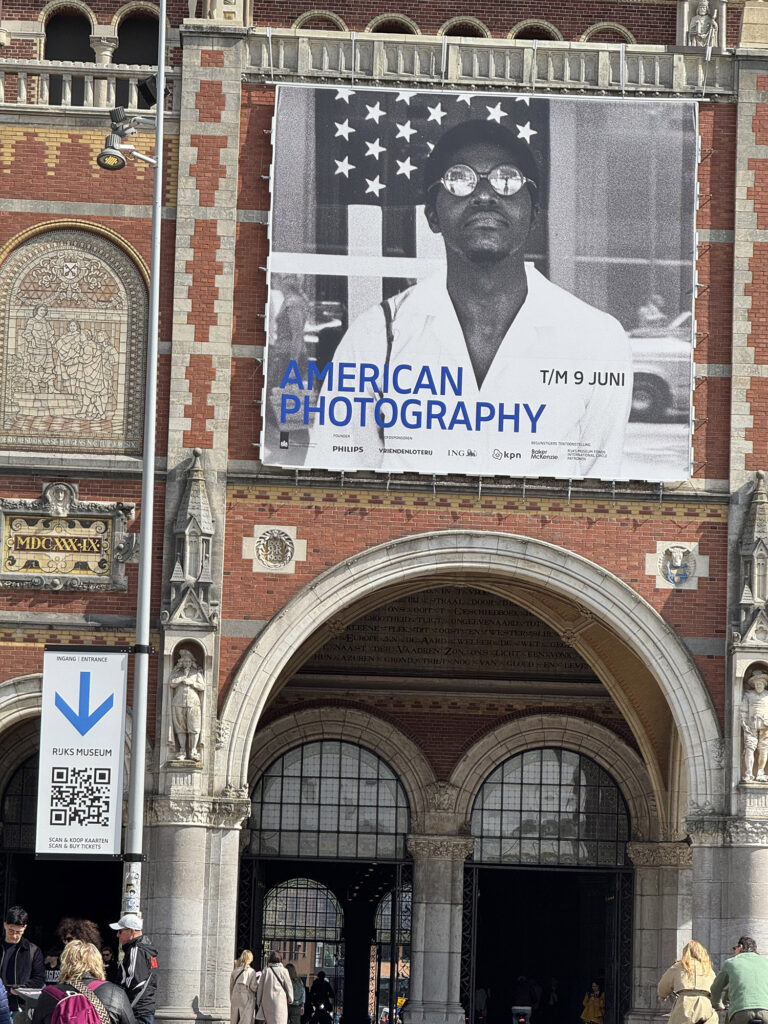
The unique power of photography could not be questioned. It was exhaustive and thoughtful. Everything and everyone was represented. From the earliest American photograph, to the most contemporary. There were over 200 images. The choice to look or to look away was your’s.
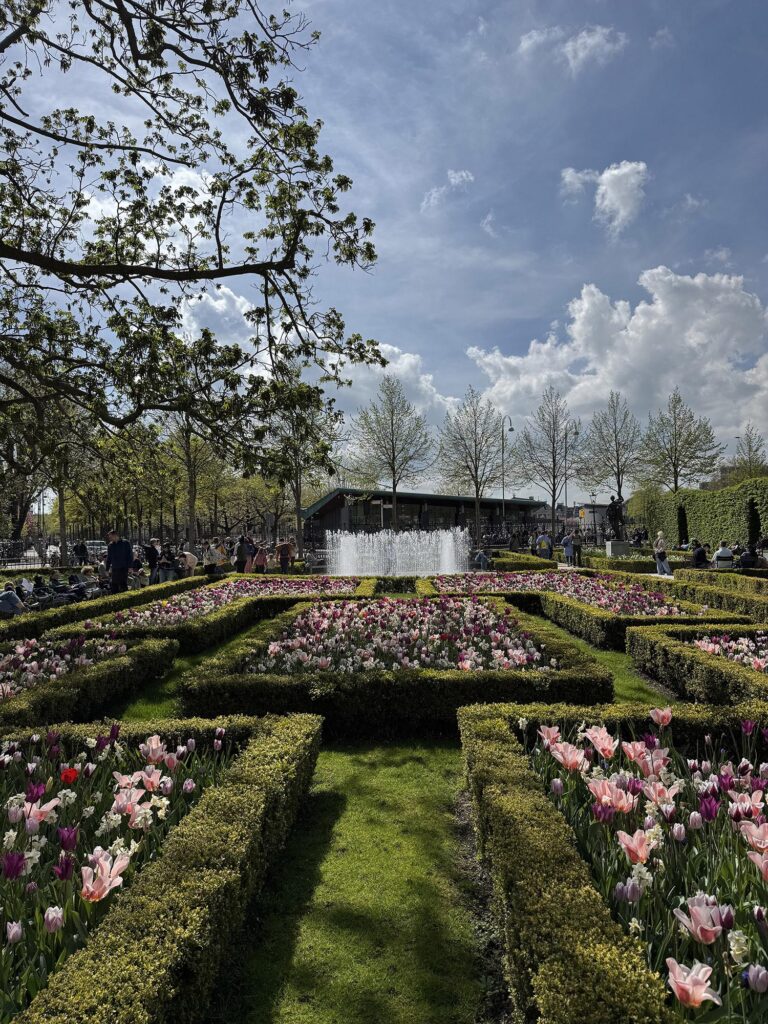
There’s nothing like a beautiful garden to make things better. I needed it and a rest after the exhibit. This one at the Rijks was resplendent with tulips in full bloom.
As you can tell, we enjoy returning to certain places, being remembered, becoming familiar and nurturing friendships (no matter how casual). It made me wonder though, who would ultimately become our circle of friends, if we did decide to live in one of these favored destinations.
Uber drivers especially complained about retirees from abroad, rich expats and large companies buying up real estate (for their foreign employees). increasing the prices of already limited resources. “They are making it impossible for working class folks to live here!”
According to these particular men, unless you are very wealthy; houses are unaffordable, flats have to be shared by many friends, rooms are rented, while other people are forced to remain at home with their parents.
These drivers and the restaurant staff we encountered in Amsterdam all say that “Everything is far too expensive”. “Traffic is impossible, and the city is overcrowded.” In other words, STAY HOME!
It seems to be the same story, different country. This time, WE would become the “they”, the “other”.
Are we willing to become one of “those people” again? Am I ready to be among the ones bringing economic harm and displacement? Do I still have the strength and patience to be the “foreigner”, the “immigrant”? It feels like I’ve been that all my life.
At 72, I’ve finally learned how to be me in America. Am I ready to repeat that somewhere else? Would we find our way, or would we forever be considered tourists? After-all, I’m still referred to as a “visitor” in Santa Fe. We would certainly always be “the Americans”. Especially now. And America is feeling less and less like home.
These are the questions I’ve been wrestling with. I can’t help it. Ever since “liberation day”, many European media have shifted their linguistic focus from exclusively referring to (the person) “Donald Trump”, to now speaking more generally of “the Americans”.
Newspapers in all the places we’ve visited have articles about Americans either “escaping” the US for alternative places to live, or cancelling their trips abroad; fearful of being faced with anti-American sentiment around the world.
Other articles offer mounting travel data related to Canadians and Europeans canceling THEIR trips to America in retaliation to tariffs, in support of non American economies, and to avoid anticipated anti-European attitudes in the US.
President Xi Jinping is here, now, in Malaysia. Many countries in Asia are building alliances among themselves to counter what they are calling “American bullying”. America is not being invited to these ASEAN conversations. Nor are EU countries inviting us to theirs.
Yesterday, while minding my own business, a man on the airplane (who said he was Australian) asked me where I was from. When I told him I was from America, he exclaimed (in a voice I considered much too loud for the space), “America!” “I like Americans!” “I believe in what Donald Trump is doing.” “I’m a business man, just like he is. Transactional.”
We had been flying all day. I was exhausted and tried to look disinterested, but he continued, “My boss likes him too. A true businessman. Although. I’m not sure you can run a country in the same way you run a business.”
Cross cultural attitudes and interactions abroad (spoken and unspoken) have suddenly become more complex, or at least more nuanced. Perhaps it’s not such a bad thing, but Americans here seem to suddenly be walking on egg shells, lowering voices and listening. You can even buy a T-shirt that says “I am Canadian.” But it’s Made in China.
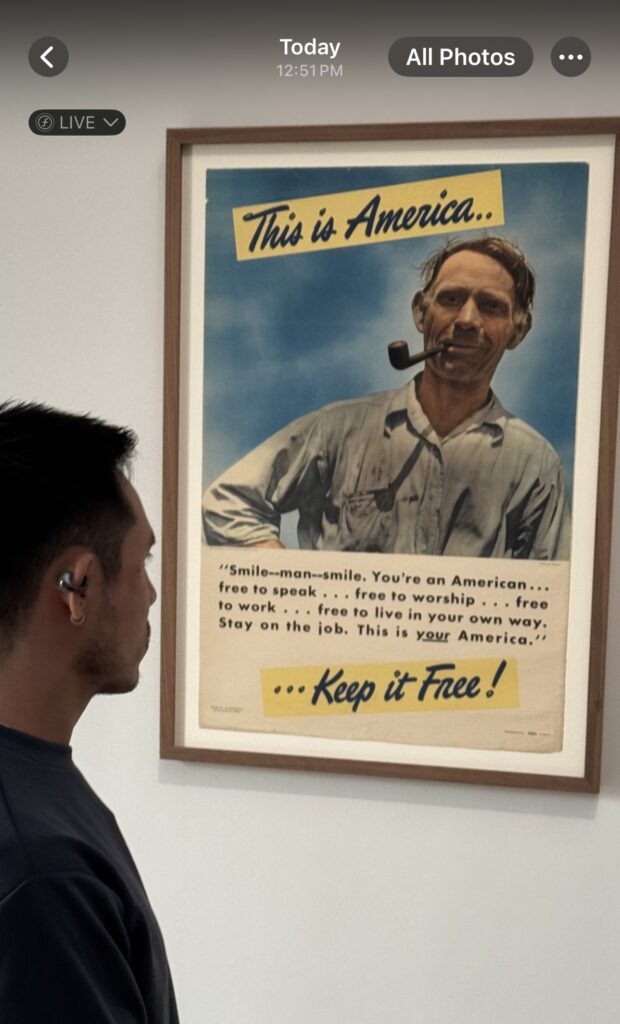
The New York Times claims that the American Photography exhibit explores the tension between how America likes to see itself, and what it really is.
As never before, America is being looked at, seen with new eyes, and strategically isolated on the world’s stage. It’s so interesting to be here, now, in the midst of this transition. It feels regressive, far less forward thinking, yet unabashedly transparent.